Acetates & Esters
Dimethyl Carbonate (DMC)
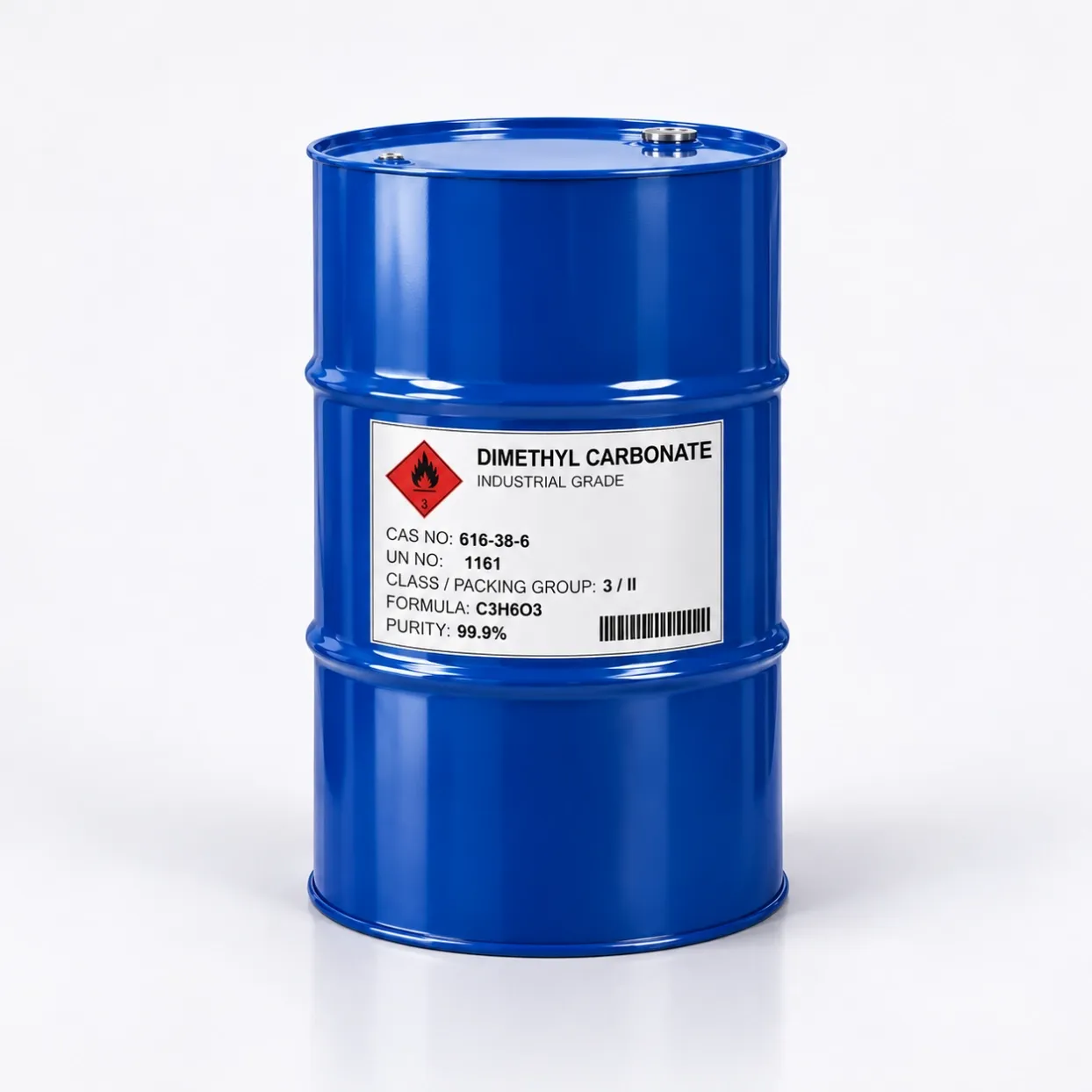
Dimethyl carbonate (DMC, CAS 616-38-6) is a versatile green solvent and chemical intermediate supplied by YDFChem at 99.9% purity in 200 kg drums. It is widely used as a lithium-ion battery electrolyte solvent, a polycarbonate intermediate, and a safer methylating agent replacing dimethyl sulfate and methyl halides. Every batch ships with a certificate of analysis (COA), and trial orders are welcome.
Specifications
- Product name
- Dimethyl Carbonate (DMC)
- CAS No.
- 616-38-6
- Purity
- 99.9%
- UN No.
- 1161
- Hazard class
- 3 (Flammable liquid), PG II
- EINECS No.
- 210-478-4
- Packaging
- 200 kg/drum
- Density (20 °C)
- 1.07 g/mL (verified)
- Boiling point
- 90 °C (typical)
- Flash point
- 18 °C (typical)
Dimethyl Carbonate (DMC) — 99.9%
Dimethyl carbonate (DMC, CAS 616-38-6) is a versatile green solvent and chemical intermediate supplied by YDFChem at 99.9% purity in 200 kg drums. It is widely used as a lithium-ion battery electrolyte solvent, a polycarbonate intermediate, and a safer methylating agent replacing dimethyl sulfate and methyl halides. Every batch ships with a certificate of analysis (COA), and trial orders are welcome.
Specifications
Density verified via PubChem, 2026-11-23. Boiling and flash points are typical literature values — confirm against the supplier SDS.
Applications by Industry
Lithium-ion batteries. DMC is one of the standard linear carbonate solvents in lithium-ion battery electrolytes, usually blended with ethylene carbonate (EC). Its low viscosity improves ion conductivity and low-temperature performance, which is why battery makers buy it in volume.
Polycarbonate. DMC is the key raw material for the non-phosgene route to polycarbonate: melt transesterification of DMC with bisphenol A replaces the traditional phosgene process, so demand follows polycarbonate capacity.
Polyurethane. DMC is used to make polycarbonate diols, a premium polyol for high-performance polyurethane elastomers, coatings and adhesives.
Fine chemicals and pharmaceuticals. DMC is a green methylating and methoxycarbonylating agent. It replaces dimethyl sulfate and methyl iodide in methylation reactions — same chemistry, far lower toxicity, and no salt waste to dispose of.
Coatings, inks and adhesives. DMC works as a solvent and coalescing agent with good resin solvency, fast evaporation and low toxicity, fitting low-VOC formulations.
Fuel and cleaning. DMC is used as a gasoline oxygenate — it raises octane and cuts particulate emissions — and as a cleaning solvent for electronics and precision parts.
DMC vs Other Methylating Agents
The chemical buyers compare most often is DMC vs dimethyl sulfate. Dimethyl sulfate is cheaper per tonne but is a potent carcinogen and a scheduled precursor, with strict handling, transport and licensing costs. DMC costs more per tonne and reacts more slowly in some methylations, but it is non-toxic, biodegradable and needs no special licence — for most buyers the total cost, including safety and compliance, favours DMC. Against methanol as a methylating agent, DMC gives cleaner selectivity and no water by-product issues in many routes.
Storage and Handling
DMC is a flammable liquid (UN 1161, Class 3, PG II, flash point about 18 °C). Store in a cool, well-ventilated area away from heat, sparks and open flame, in tightly closed containers. Keep away from strong oxidizers and strong acids. Ground containers during transfer to prevent static sparks. Store away from food products and animal feed.
Packaging & Ordering
200 kg drums, trial orders welcome. Each batch is tested before shipment and ships with a COA; full dangerous-goods documents (SDS, DG declaration) are provided for export. Contact us for a quotation with quantity, destination and packaging.
How to Buy DMC from YDFChem
Buying is straightforward. Tell us the quantity you need, the destination port and the packaging — 200 kg drums are standard. We confirm the price, lead time and dangerous-goods shipping for your route. If you have never bought from us, start with a trial order: a small quantity lets you test the product and our documents before committing to volume. Every batch is tested before shipment and ships with a COA; the SDS and DG declaration are provided for export. For battery electrolyte use, send us your specification (especially moisture and metal-ion limits) and we will confirm whether our grade meets it before you order.
FAQ
What is dimethyl carbonate used for? Mainly as a battery electrolyte solvent, a polycarbonate intermediate, and a green methylating agent in fine chemicals and pharmaceuticals.
Is DMC a dangerous good? Yes. DMC is classified UN 1161, Class 3 (flammable liquid), PG II. We handle DG booking and documentation for export.
What purity do you supply? 99.9%, with a per-batch COA.
Can I use your DMC for battery electrolytes? Our standard grade is 99.9% industrial grade. Battery electrolyte use usually needs battery grade with tighter moisture and metal-ion limits — tell us your specification and we will confirm whether we can meet it.
What is the difference between DMC and dimethyl sulfate? Both methylate, but dimethyl sulfate is highly toxic and a scheduled precursor; DMC is non-toxic, needs no special licence, and produces no salt waste.
What packaging is available? 200 kg drums as standard; ask us for other packaging.